
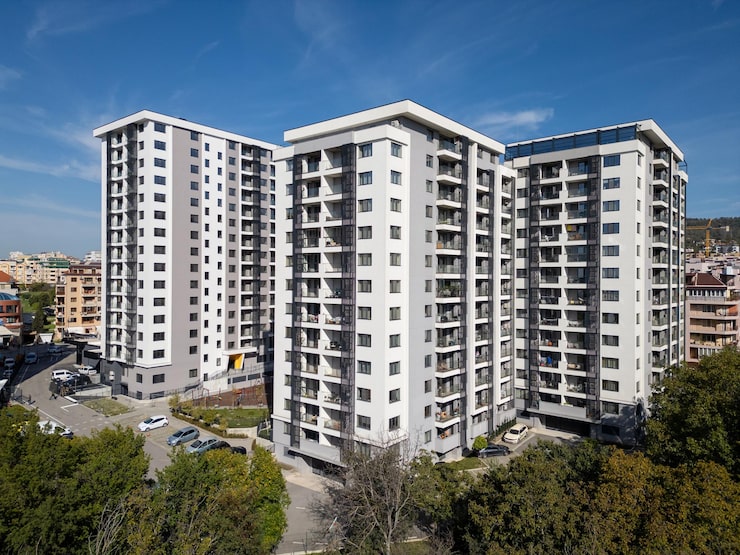
Some real estate launches add inventory to a market. Others change the market entirely. Harnandipuram Township falls into the second category. At 1,287 acres, this is not just Ghaziabad’s biggest launch—it is one of NCR’s most significant urban development initiatives in recent memory. Developed by the Ghaziabad Development Authority (GDA), this integrated township behind Raj Nagar Extension represents a complete rethinking of how cities should grow. Not as random apartment clusters fighting for space, but as planned ecosystems where residential, commercial, institutional, and recreational uses coexist by design.
This is the launch where early movers become legacy owners. Where buying in 2024 means owning prime real estate in a functioning mini-city by 2030. Where your address transitions from “emerging area” to “premium location” within a decade. The configuration variety—1, 2, 3 BHK apartments, residential plots, office spaces, and retail shops—ensures that whether you are a first-time homebuyer, a plot investor, a business owner, or a commercial real estate player, there is an entry point for you. Expected possession by December 2028 means the timeline is realistic and the opportunity window is limited. Let us explore why this launch deserves your attention and possibly your capital.
Understanding “Biggest”: What 1,287 Acres Actually Means
Numbers can feel abstract. Let us make 1,287 acres tangible. That is 521 hectares. That is roughly 5.2 square kilometers. That is bigger than Monaco. That is larger than many of Delhi’s established colonies. That is space for potentially 40,000-50,000 residential units plus commercial and institutional zones. That is a population capacity of 150,000-200,000 people once fully developed—equivalent to a mid-sized Indian city.
Harnandipuram Township Ghaziabad is not just large—it is comprehensively planned. The master layout allocates zones for different functions. Residential sectors separated by green buffers. Commercial corridors along main roads. Institutional areas for schools, hospitals, and government offices. Industrial or IT zones for employment generation. Recreational areas including parks, sports complexes, and cultural centers. This functional zoning prevents the chaos that plagues organically grown areas where residences, shops, factories, and schools compete for space.
The scale allows self-sufficiency. Children attend schools within the township, eliminating 45-minute commutes. Parents access healthcare at township hospitals, not distant facilities. Weekend entertainment happens at township malls and recreational centers. Employment opportunities exist within commercial and office zones. Daily grocery shopping happens at neighborhood markets. This reduces dependency on external infrastructure and creates a complete living experience.
Large townships support infrastructure that small projects cannot justify. A 100-acre project might have a modest clubhouse. A 1,287-acre township can build sports stadiums, Olympic-size swimming pools, convention centers, and amphitheaters. The per-unit cost of these facilities drops dramatically when spread across tens of thousands of buyers. You get five-star amenities at three-star prices.
The environmental benefits of scale are substantial. Large contiguous green zones support actual biodiversity, not token landscaping. Water bodies can be meaningful sizes that help groundwater recharge and local climate control. Sewage treatment plants achieve economies of scale. Waste management becomes centralized and efficient. Solar power infrastructure becomes viable. These sustainability features are expensive for small projects but achievable for large townships.
The phased development approach spreads construction over 7-10 years. Phase 1 establishes core infrastructure and initial residential units. Subsequent phases add commercial areas, additional residential capacity, and advanced amenities. This phasing prevents construction chaos where everything happens simultaneously. Early residents see the township grow around them, which builds community ownership and pride.
The GDA Factor: Government Credibility Meets Urban Vision
Private developers build projects. Governments build cities. The difference matters enormously. When Ghaziabad Development Authority undertakes Harnandipuram Township, you are not betting on a company’s financial health or a promoter’s integrity. You are investing in an institution with statutory authority, public accountability, and a mandate that extends beyond profit.
GDA has shaped Ghaziabad’s growth for decades. Vasundhara, Indirapuram, Raj Nagar, Kaushambi, Crossings Republik—these are not just neighborhoods, they are GDA-planned townships that house hundreds of thousands of families. The authority has experience in land acquisition, master planning, infrastructure development, and long-term township management. This institutional memory is invaluable. They know what works, what fails, and how to course-correct.
The land ownership is clear and complete. One of the biggest risks in mega-projects is land consolidation. Private developers announce grand visions but spend years acquiring land parcels from multiple owners. Disputes arise. Projects stall. GDA owns the entire 521 hectares. The land title is clean. Development can proceed without ownership clouds that plague private projects.
The approval process follows transparent government protocols. Environmental clearances, layout approvals, building permissions—all proceed through established channels with public scrutiny. The process might be slower than private developers who sometimes cut corners, but the foundation is stronger. You are not gambling on regulatory arbitrage. You are buying into a project that meets legal standards from conception.
Funding comes from institutional sources. GDA has access to government budgets, infrastructure bonds, and development loans at favorable rates. The authority is not dependent on pre-sales to fund construction, which reduces pressure to oversell or compromise quality to meet deadlines. The financial model is more stable than private developers juggling bank loans, private equity, and buyer advances.
Pricing follows rational logic. Governments aim for cost recovery plus reasonable margins that fund future public infrastructure. They do not operate on profit maximization like private developers. This typically means better value for money. The exact pricing for harnandipuram apartments ghaziabad and harnandipuram plots ghaziabad is available on request, but historical GDA pricing suggests 10-20% below comparable private projects in similar locations.
Accountability is your insurance. If GDA delays possession, you have legal recourse through consumer forums with real teeth. If quality is substandard, media exposure and political pressure force corrections. If funds are mismanaged, audit mechanisms and Right to Information laws provide transparency. These checks are weak or absent in purely private transactions.
Post-possession management is a GDA strength. Townships need maintenance for decades—roads, parks, water systems, security. GDA has institutional experience running large residential zones. The authority collects maintenance charges and has systems to sustain services. Private developers often walk away post-possession, leaving residents to form societies that struggle with governance and funding. GDA stays engaged for the township’s lifetime.
Location Dynamics: Behind Raj Nagar Extension
Real estate success depends on answering one question correctly: where will people want to live in 10 years? Harnandipuram Smart City is betting that the answer is “behind Raj Nagar Extension in Ghaziabad.” Let us examine why this bet is intelligent.
Raj Nagar Extension has matured from an emerging area in 2010 to an established residential zone in 2024. The metro stations at Shaheed Sthal and Rajendra Nagar provide direct connectivity to Delhi and Noida. Schools like DPS and Ryan International are operational. Hospitals including Yashoda and Max serve healthcare needs. Markets and malls provide shopping options. Families live here comfortably. Property values have appreciated steadily—from ₹2,500 per square foot in 2012 to ₹5,500-₹6,500 today. This maturity de-risks Harnandipuram.
Being “behind” Raj Nagar Extension means you benefit from its infrastructure without paying its prices. The schools, hospitals, metro stations, and markets that serve Raj Nagar Extension residents are 10-15 minutes away from Harnandipuram. You access established amenities immediately while paying new-area rates. This proximity arbitrage is powerful. You get ₹6,000 per square foot location benefits while paying potentially ₹4,000-₹4,500 per square foot.
Connectivity is the foundation of any location’s success. The existing metro network on Pink and Blue Lines provides access to Connaught Place (50 minutes), Noida Sector 18 (35 minutes), and Vaishali (20 minutes). The Meerut RRTS corridor under construction will pass nearby, creating a new high-speed connection that slashes travel times to Delhi and Gurgaon. The Eastern Peripheral Expressway enables quick access to Greater Noida, Faridabad, and Yamuna Expressway. Road widening projects on key arteries are improving traffic flow.
Employment centers are accessible without extreme commutes. Noida’s Sector 62 and Sector 18 IT/ITES hubs are 40-50 minutes away—manageable for daily commutes. Greater Noida’s industrial zones are within reach. Ghaziabad’s own commercial areas like Kaushambi and Indirapuram are nearby. Delhi’s employment markets are accessible via metro. For dual-income households where partners work in different zones, this central-east NCR location offers compromise.
The surrounding development is favorable. Neighboring projects by private developers are coming up, which raises the overall area’s profile. Commercial establishments are opening in anticipation of residential influx. Schools are planning campuses. This parallel infrastructure development means early Harnandipuram Township residents will not suffer years of underdevelopment. The ecosystem is building alongside the residential project.
Future infrastructure acts as multipliers. The Jewar Airport in Greater Noida, though 50 kilometers away, will make East NCR more attractive for business travelers and aviation-related industries. The Regional Rapid Transit System (RRTS) connecting Meerut, Ghaziabad, and Delhi will reduce travel times dramatically. Every infrastructure improvement reduces Harnandipuram’s perceived distance from key NCR nodes, which translates directly into property value appreciation.
The land use around Harnandipuram is controlled. You are not surrounded by polluting industries or high-density slums. The area is designated for residential and commercial mixed-use, creating a balanced urban environment. This controlled development protects your investment and quality of life for decades.
Configuration Diversity: Everyone Has an Entry Point
Great townships serve diverse populations. Harnandipuram Township Ghaziabad achieves this through configuration variety that addresses different buyer needs, budgets, and life stages.
The apartment segment covers 1, 2, and 3 BHK options. The 1BHK units are entry-level homes for singles, young couples, and first-time buyers. These compact spaces keep costs manageable while providing ownership. For parents buying for children starting careers in NCR, 1BHK represents an affordable asset that stops rent outflow and builds equity. Young professionals who have been paying ₹10,000-₹12,000 monthly rent can redirect that money toward EMIs on a home they will own.
The 2BHK configuration is the volume segment. Nuclear families with one or two children fit comfortably in these units. Two bedrooms, living area, kitchen, bathrooms—all essentials without excess. The post-pandemic work-from-home reality makes 2BHK particularly valuable. One bedroom serves as an office during the day, maintaining work-life separation that 1BHK cannot provide. The pricing for 2BHK units in government projects typically falls within middle-class affordability—₹40-55 lakhs range based on size and location within the township.
The 3BHK apartments serve larger families and those wanting extra space. Joint families where grandparents live with children need three bedrooms for privacy and comfort. Nuclear families planning long-term buy 3BHK even if current needs are smaller. The extra room serves as home office, guest room, or hobby space until family size expands. Investors favor 3BHK because rental yields are stronger and appreciation is typically better in percentage terms.
The harnandipuram plots ghaziabad offer different advantages entirely. Plots give you construction control, design freedom, and land ownership that appreciates independent of structures. You can build your architectural vision, not accept a developer’s template. For families wanting generational homes custom-built to specific needs—prayer rooms, home theaters, large kitchens for joint families, accessibility features for elderly—plots are ideal.
Plot sizes likely range from small (100-150 square meters) for compact homes to large (400-500 square meters) for sprawling residences with gardens. This variety allows everyone from first-time plot buyers to wealthy families wanting estate-style living to find suitable options. The per-square-foot cost of plots is typically 10-15% lower than apartments because you are buying raw land, but total investment can be higher once construction costs are included.
The commercial component—offices and retail shops—serves two purposes. For residents, these spaces provide local employment and shopping convenience. For investors, they represent an asset class different from residential. A well-located shop in a township serving 100,000+ people generates strong rental income. Offices attract small businesses, startups, and branch offices of larger companies. Medical clinics, coaching centers, salons, restaurants—all need retail space in residential townships.
This configuration diversity creates community balance. If everyone owns identical 2BHK apartments, the demographic is monotonous. When you mix 1BHK young professionals, 2BHK nuclear families, 3BHK joint families, plot owners in custom homes, and people running businesses in commercial spaces, you create a vibrant, multi-layered community. This diversity strengthens social fabric and economic resilience.
Smart City Integration: Technology Meets Livability
The Harnandipuram Smart City branding signals intent to integrate technology and sustainability into the township’s DNA. While exact specifications await finalization, we can anticipate features based on India’s Smart Cities Mission and recent GDA initiatives.
Digital infrastructure forms the foundation. Fiber optic cables laid during construction enable high-speed internet to every unit. In an era where remote work, online education, and digital entertainment are standard, gigabit connectivity is not a luxury—it is basic infrastructure. Reliable internet reduces dependency on expensive mobile data and enables home-based businesses and freelancing.
Smart metering for utilities provides real-time consumption data. Residents track electricity and water usage, identify wastage, and optimize costs. Utility providers detect leaks and theft immediately. Billing becomes automated and transparent. These systems reduce disputes between residents and management while promoting conservation.
Integrated traffic management uses sensors and adaptive signals to optimize vehicle flow. Traffic lights adjust timing based on actual traffic, not fixed schedules. This reduces congestion at peak hours and saves residents time daily. Internal township roads prioritize pedestrian and cyclist safety through dedicated lanes and signalized crossings.
Waste management systems enforce segregation at source—wet waste, dry waste, e-waste, hazardous waste collected separately. Composting facilities convert organic waste into fertilizer for township parks. Recycling centers process dry waste. This circular economy approach reduces landfill dependency and operating costs while meeting environmental regulations.
Renewable energy integration includes solar panels on common buildings, streetlights, and potentially rooftop solar incentives for individual homes. Complete renewable power is unrealistic for a township this size, but even 20-25% contribution reduces carbon footprint and long-term electricity expenses. Battery storage systems provide backup during outages.
Water conservation features include rainwater harvesting in every building, treated sewage water for irrigation and non-potable uses, and low-flow fixtures in public areas. As groundwater depletes and municipal supplies become unreliable, these systems ensure water security. Township-level water treatment allows independence from external supply vagaries.
Surveillance and security systems with CCTV at entry points, major intersections, and public spaces deter crime and assist investigations. Integrated command centers monitor traffic, utilities, and security from central locations. Emergency response coordination improves when all systems communicate through common platforms.
Cashless systems for maintenance payments, utility bills, and township services reduce corruption and improve convenience. Digital payment trails create accountability. Residents can audit exactly where their money goes and what services they receive. E-governance platforms allow online complaint registration, amenity booking, and information access.
Green building practices in residential and commercial construction ensure energy efficiency and healthy indoor environments. Natural lighting, proper ventilation, insulation, and energy-efficient HVAC systems reduce operating costs over decades. Buildings certified under GRIHA or IGBC standards command rental and resale premiums.
These smart features are not gimmicks for marketing brochures. They are systems that reduce long-term costs, improve daily convenience, and create sustainable living environments. Early harnandipuram apartments ghaziabad residents will benefit from infrastructure that most existing Indian townships lack.
The Investment Case: Wealth Creation at Scale
Real estate creates wealth through two mechanisms—capital appreciation and rental income. Harnandipuram Township offers both, amplified by scale and timing advantages.
The appreciation trajectory follows predictable patterns in large township development. Phase 1 (2024-2028) sees base pricing as uncertainty is highest. Early buyers pay lowest rates but accept construction risk and delayed gratification. Phase 2 (2028-2032) sees possession and initial occupation. Tangible infrastructure reduces uncertainty. Prices adjust upward 40-60% from Phase 1 as delivered projects always command premiums. Phase 3 (2032-2038) sees maturation. Schools are full, markets are established, the community is vibrant. Demand from people wanting immediate livability (not waiting for development) drives prices. Phase 1 buyers have seen 100-150% appreciation.
Your entry timing determines returns. Booking now in the pre-launch or early launch phase means Phase 1 pricing. You capture the entire appreciation curve. Waiting until 2027-2028 means Phase 2 pricing—you pay 30-40% more and miss the initial jump. Entering post-2030 means Phase 3 pricing—you pay market rates for a known quantity with minimal appreciation runway.
Historical precedents validate this pattern. Indirapuram buyers from the late 1990s saw 12-15x appreciation over 20 years. Crossings Republik investors who entered in 2010-2012 saw 3-4x appreciation by 2020. GDA’s Vasundhara and Kaushambi townships delivered similar returns to early entrants. Harnandipuram Township Ghaziabad is positioned to repeat this trajectory given superior scale and connectivity.
The self-reinforcing nature of large townships accelerates appreciation. As more residents move in, more businesses set up. As commercial activity grows, employment opportunities increase. As jobs multiply, housing demand strengthens. As demand rises, prices appreciate. This virtuous cycle is unique to projects that achieve critical mass—typically 20,000+ residential units—which Harnandipuram will easily surpass.
Infrastructure completion triggers appreciation spikes. The Meerut RRTS completion (scheduled 2026-2027) will reduce Delhi travel time dramatically. Expect 15-20% price jumps when that happens. The metro extension to areas closer to Harnandipuram (under planning) will trigger another spike. Each major infrastructure milestone rerates the location’s value.
Rental yields provide income while appreciation builds wealth. A 2BHK apartment in a mature township area realistically rents for ₹14,000-₹20,000 monthly by 2030-2032. On a ₹45-50 lakh investment, that is 3.5-5% annual yield. Add 8-10% annual appreciation and total return is 11.5-15% annually. This beats fixed deposits, corporate bonds, and most mutual funds on risk-adjusted basis.
For NRIs, GDA projects offer investment security that private developers cannot match. Transparent processes, institutional backing, and clear titles reduce fraud risk. Funds go into escrow accounts, not developer pockets. Construction monitoring is systematic. NRIs can invest with confidence, knowing their capital is protected by institutional mechanisms.
Tax benefits enhance post-tax returns. Home loan principal repayment qualifies for Section 80C deduction up to ₹1.5 lakhs annually. Interest payments qualify for Section 24 deduction up to ₹2 lakhs. For taxpayers in 20-30% brackets, these deductions reduce effective EMI costs by 15-20%. The real cost of ownership is substantially lower than nominal payments.
The phased payment structure preserves liquidity. You do not pay the entire amount upfront. Construction-linked payments spread over 4-5 years allow continued investment in other assets. Your capital earns returns elsewhere until payment deadlines, improving overall portfolio returns.
The 2028 Possession Reality: Planning for Success
December 2028 possession for Harnandipuram Township means approximately four years from now. This timeline creates opportunities and requires planning.
For end-users, four years is enough to strengthen finances significantly. Young couples booking now can save additional down payment, improve credit scores for better loan rates, and plan interiors in advance. A household earning ₹80,000 monthly today might earn ₹1.2 lakhs by 2028 through promotions and increments. This income growth eases EMI burden and allows better construction quality or larger configuration than currently affordable.
Life stages change over four years. Singles who book now might marry and have children by 2028. The 1BHK that seemed sufficient in 2024 feels cramped in 2028. Plan for life changes when selecting configuration. Err toward slightly larger than current needs to accommodate growth.
For investors, four years of pre-possession appreciation builds wealth before deciding whether to hold or exit. If markets are strong in 2028 and you need capital elsewhere, you can sell at possession and book 50-70% gains. If markets are soft or you prefer long-term wealth creation, you hold and rent, benefiting from both cash flow and continued appreciation.
Use four years to stay informed about township development. Visit the site every 4-6 months. Track construction progress against promised timelines. Participate in buyer forums and groups. Monitor infrastructure developments in surrounding areas—metro construction, road widenings, commercial projects. This active involvement helps you make better decisions about occupancy, rental, or sale.
For those taking home loans, use four years to optimize your financial profile. Pay off expensive debt like personal loans and credit cards. Build emergency funds covering 12 months of expenses. Improve credit scores above 750 for best loan rates. When loan processing happens near possession, you qualify for better terms. A 0.5% interest rate difference on ₹40 lakhs saves ₹3-4 lakhs over 20 years.
Plan post-possession strategy during construction. If occupying, finalize interior contractors, material selections, and designs 6-12 months before possession. The sooner you complete interiors post-possession, the faster you move in and stop paying rent elsewhere. If renting out, connect with property brokers 6-9 months before possession. Early listings attract quality tenants who sign agreements before possession, ensuring no vacant months.
Buffer for delays. Add 6-12 months mentally to December 2028. Government projects rarely meet original deadlines, though GDA’s track record is better than many private developers. Planning for Q2 or Q3 2029 actual possession prevents disappointment and allows better financial planning. RERA mandates delay compensation, so late possession comes with financial recourse.
The four-year horizon allows macro-economic adaptation. If interest rates drop significantly, refinance your loan at lower rates. If property markets surge beyond expectations, consider pyramiding—selling other assets to consolidate into Harnandipuram at current prices. If markets crash, negotiate payment schedule flexibility with GDA or arrange alternative funding. Flexibility during the construction period is your strategic advantage.
Making Your Move: Action Steps for Serious Buyers
If Harnandipuram Township aligns with your needs and budget, the path from interest to ownership has specific steps worth understanding.
Start with information gathering. Contact GDA’s authorized sales channels or visit their office. Request the master layout plan showing residential sectors, commercial zones, amenities, and connectivity. Ask for configuration details—exact sizes of apartments, plot dimensions, pricing sheets with all charges itemized. Clarity at this stage prevents surprises later.
Visit the site physically. Google Maps and brochures cannot replace standing on the actual land. Drive to Harnandipuram. Walk around the area. Check proximity to Raj Nagar Extension. Observe traffic patterns at different times. Look at neighboring developments. Talk to locals about water supply, power situation, and connectivity. Spend 2-3 hours experiencing the location—your gut feel combined with data makes better decisions.
Verify documentation thoroughly. Check the land title documents ensuring GDA has clear ownership. Review the master plan approval from Ghaziabad municipal authorities. Confirm environmental clearances are in process or obtained. Once RERA registration happens, verify all details on UP-RERA website. If anything seems unclear or questionable, consult a real estate lawyer. The ₹10,000-₹15,000 spent on legal due diligence can save lakhs in future disputes.
Calculate total costs precisely. The base price is just the starting point. Add development charges (EDC and IDC), power backup charges, club membership fees, preferential location charges (corner plots, higher floors), parking fees, stamp duty (approximately 7% in UP), registration charges (1%), and GST. For plots, add construction costs. A realistic all-in budget prevents mid-transaction financial stress.
Assess financing carefully. Check your home loan eligibility with 2-3 banks or HFCs. Compare interest rates, processing fees, prepayment terms. Pre-approved loans give you negotiation leverage and faster disbursal. Ensure your debt-to-income ratio remains comfortable—EMI should not exceed 40-45% of household income. Leave room for emergencies and other investments.
Read the allotment letter or agreement draft thoroughly before signing. Pay special attention to possession date clauses, quality specifications, amenity commitments, delay penalty terms, and cancellation policies. GDA agreements are standardized, but understand what you are committing to. If something seems unfair, discuss with GDA officials or seek legal advice.
Join buyer communities immediately after booking. WhatsApp groups and Facebook communities form quickly around large projects. These forums share construction updates, documentation experiences, loan tips, and collective problem-solving. The shared knowledge helps everyone navigate challenges better. Early members often become informal leaders who liaise with GDA on behalf of the community.
Monitor progress actively throughout construction. Visit every few months. Take photos to track visible progress. Compare actual construction against promised timelines. If delays or quality issues emerge early, collective buyer pressure on GDA can force corrections. Passive buyers who show up only at possession often discover problems too late to fix.
Plan your endgame strategy now. Will you occupy, rent, or sell? Each path requires different preparation. Occupiers need interior planning. Renters need property management contacts. Sellers need market timing awareness. Having clarity prevents rushed decisions under pressure later.
Your dream in Harnandipuram Smart City starts with informed action. The biggest launch in Ghaziabad deserves your serious attention. Whether it deserves your money depends on how well it aligns with your life goals, financial capacity, and risk tolerance. Answer those questions honestly, then move with conviction.
Frequently Asked Questions
1. How will GDA manage such a large project without construction delays?
GDA typically divides large projects into multiple phases and sectors, appointing different contractors for each. This parallel execution accelerates construction and reduces dependency on single contractors. Payments to contractors are milestone-based with retention amounts ensuring quality. However, realistically expect 6-12 months delay beyond the December 2028 timeline due to monsoons, labor issues, or approval delays. GDA’s track record shows they complete projects, just not always on original timelines. RERA compensation applies for delays exceeding promised dates.
2. What is the expected price difference between Phase 1 and later phases?
Based on GDA’s historical pricing patterns in projects like Crossings Republik, expect Phase 2 (post-2026) to be 20-30% higher than Phase 1. Phase 3 (post-2028 possession) will likely be 50-70% higher than Phase 1 prices. Early buyers capture this entire appreciation. The price escalation reflects reduced uncertainty as construction progresses and infrastructure becomes tangible. Corner plots and premium locations within the township will see even higher escalation due to limited supply.
3. Can I transfer or resell my booking before possession?
Yes, GDA allows transfer of allotments with proper documentation and a transfer fee (typically 1-2% of property value). The process takes 2-4 months involving verification of both parties. Many buyers do resell in pre-possession period when early booking prices have appreciated 30-50%. Ensure all your installments are paid on time and documentation is complete. Transfer becomes easier if the new buyer meets GDA’s eligibility criteria and has clear financial records. Resale market is active for GDA projects due to institutional credibility.
4. What are the risks specific to government projects like this?
Primary risk is bureaucratic delay—government projects move slower than private ones due to multiple approval layers. Budget reallocations or political changes can affect timelines. However, abandonment risk is virtually zero—GDA will not walk away from a 1,287-acre project. Quality can be variable depending on which contractor executes your sector. Maintenance post-possession might be less responsive than private societies. Balance these risks against benefits—no developer bankruptcy risk, transparent processes, clear land titles, and legal recourse through consumer forums and courts.
5. How does Harnandipuram compare to private township projects in pricing and quality?
GDA pricing is typically 10-20% below comparable private projects because profit motive is lower—they aim for cost recovery plus margins for public infrastructure funding. Quality is comparable to mid-tier private developers, sometimes better in structural aspects due to strict government specifications, sometimes weaker in finishes and aesthetic details. The key advantage is institutional backing—GDA cannot go bankrupt or abscond. The trade-off is slower delivery and less flexibility in customization compared to premium private developers. For value-conscious buyers prioritizing security over speed, GDA offers compelling value.